Why "that poop club"?
[ ]
We’re “that poop club”, and we do exactly what we say on the tin. Roughly once a week, we gather up and talk about:
- The things we cooked/ate this week
- The things we pooped
- And how it made us feel!
I'm Tim, the current leader and the person writing this blog post. And yeah, poop is a subject that often gets a lot of gag reactions or just "haha poop", but this club is slightly more serious than that, and in the next few paragraphs, I'll tell you why.
Our goal
So, why “that poop club”? I’ve spoken about before how this club is kind of a machine learning theory probe involving human behavior, and that part is still true for me.
But I think the more immediate goal that’s beneficial to all of us — and why I’m not just holing up in my apartment lab manipulating PyTorch tensors — is that I hope that we, as a club, can develop a way to live healthier lives that’s easy to pick up and rewarding to master, no matter where you’re in your journey of life. And personally, I think that starts with eating right, because food is the fuel for anything else you wanna do.
But wait! Isn't diet optimization a solved problem?
However, one question many people have when they hear that is: Can’t I just ask a dietitian to tell us the answers or to give us nutritional advice? Or just look on MyFitnessPal?
And yes, we already have tons of food health experts in the world. But in truth, the answer is closer to... maybe?
The reason we're not at a "yes" often depends on conflating “overall utility” with “evidence-backed nutritional scoring”. What do I mean by that?
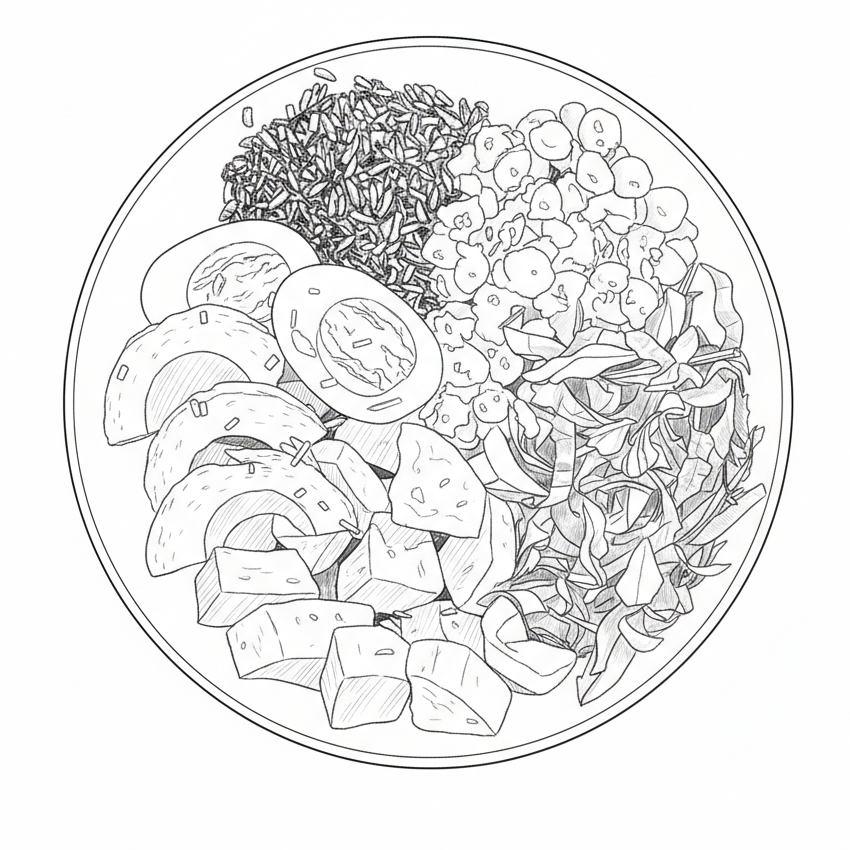
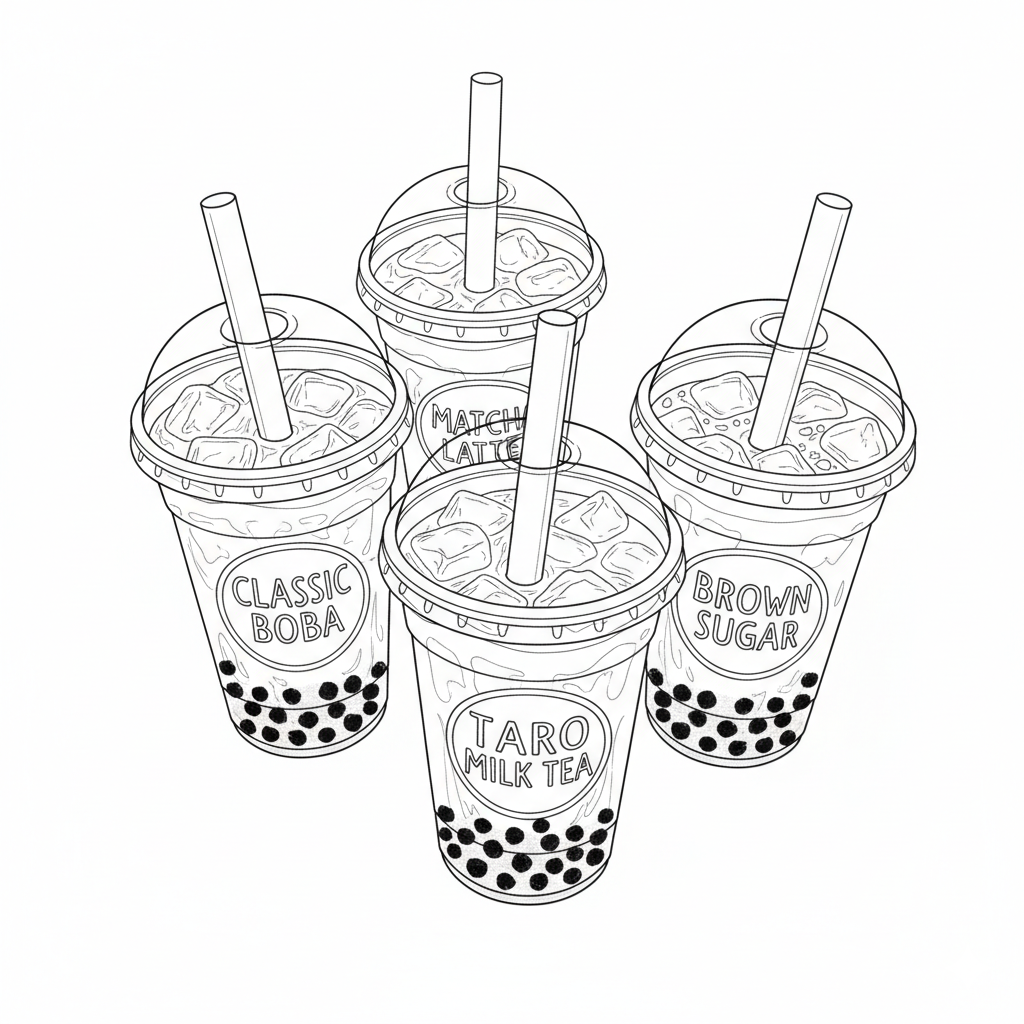
The battle between healthy and happy
| Healthy | Happy |
|---|---|
 |
 |
| The battle between healthy... | ... and happy. |
Technically, if we all went to Walmart right now with a dietitian, I’m sure we could write an evidence-based meal plan that gives you "perfect nutrients" using only ingredients in the store.
But the challenge comes when I remember everything else I have to do:
- What about going out to a pizza place or for boba tea with friends?
- What if my lab is due at 11:59pm and I don’t have time to make poached tilapia with brussels sprouts? I’ll just eat dining court chicken nuggets instead.
- Or just plain, “I don’t want to spend 2 hours cooking a day just to eat bitter, flavorless mush for the fourth time this week.”
If the “perfect nutrition” meal plan compromises all the things you actually want to do or misses the scenarios you actually deal with, is it really perfect?
The Neuromorphological Divide
And so, we arrive at what I call the Neuromorphological Divide: the gap between how humans think they think and how humans actually think.
How we think we think
“I want to contribute great things to this world, so I will eat grilled chicken and salad every day so I can be the best version of me.”
How we actually think
“Hahaha SKIBIDI TOILET! Tralalero Tralala... 6 7. Yo, finna go rizz up that gyatt.”
If you read self-help, self-improvement, or psychotherapy books, they often assume humans can run on logical ‘reasoning chains’ like modern large language models:
“I have the goal XYZ and ABC constraints; the optimal solution is a salad, so therefore I will eat a salad and be happy.”
But actual studies on human eating patterns—including one we did last semester for our HCI project—suggest that the ‘inner monologue’ of dieting is mostly a surface-level illusion.
When we surveyed people about their actual eating process, they largely relied on habit, taste, and convenience, with bits and pieces of random theories thrown in. Compared to a professional nutrition degree, they appeared to know almost nothing. However, many of these people were at least moderately healthy and could clearly function. If you followed the logic of self-help books, you’d think they would be dead.
The habit alignment question
So, now we arrive at a slightly modified form of the question this club wants to solve:
“How do we make a diet plan which is sustainable, efficient, and compatible with the habit-based reasoning structure of the brain?”
Or, more simply: “How do we make eating well feel like the obvious choice, instead of a compromise?”
(Positive) Feedback loops
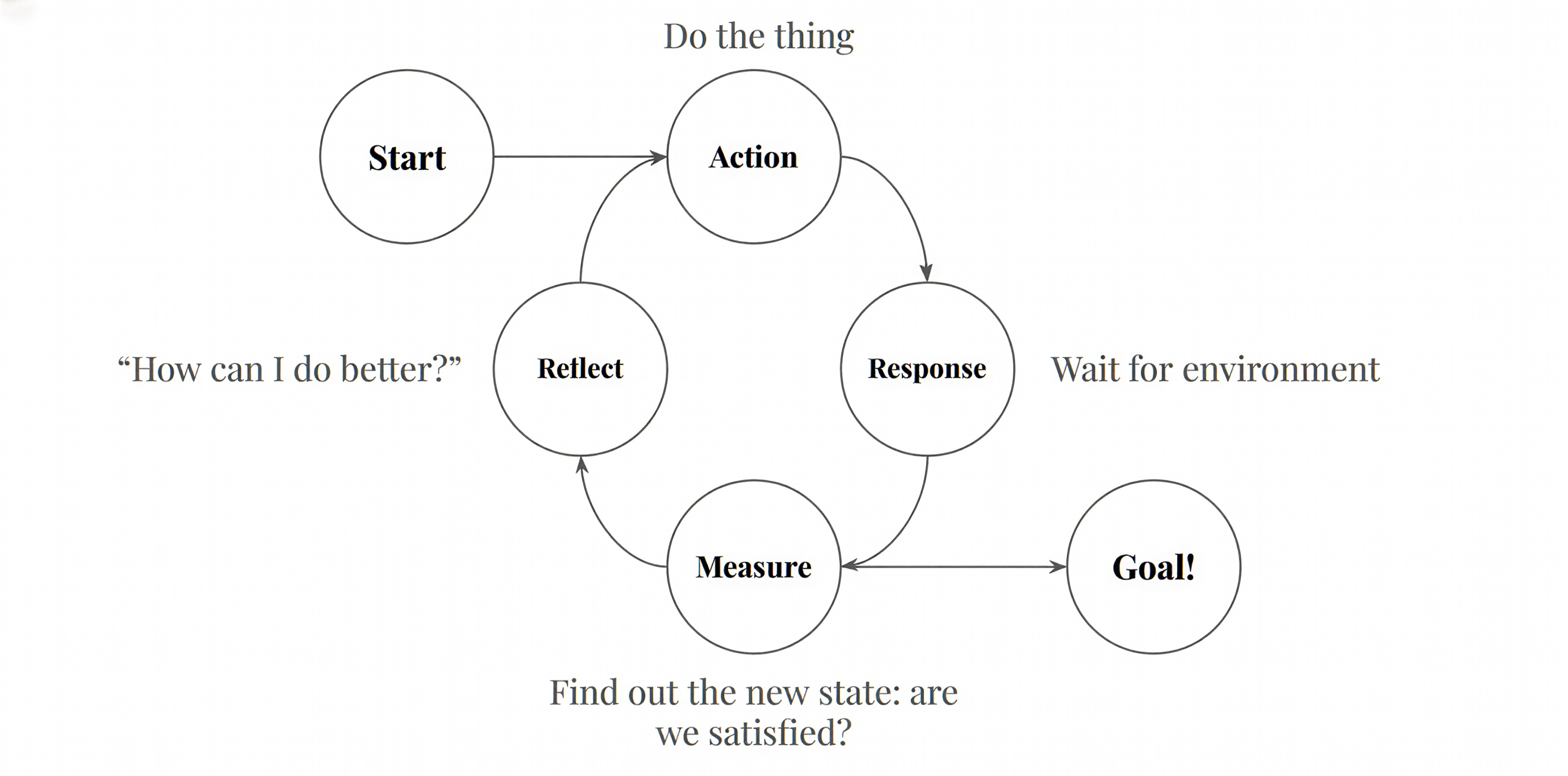
To effectively form habits, we need a feedback loop, which consists of an action (eating) and a measurement/feedback source. Basically, most positive feedback loops follow a 4-step process:
- Action: You do something to achieve a goal.
- Response: You wait for the environment to respond.
- Measurement: You measure the result (how far was I off the goal).
- Improvement: You improve your next choice of action.
Take learning to parallel park. The first time, you’re OK at best. But then you practice—you try to park, you get out, check the lines, and adjust: “maybe I’ll go more to the left this time.”
Obviously, if we want to implement a feedback loop with dietary health, eating is our action. But what is the response/measurement?
- Taste can be easily hijacked.
- Following a diet is often the worst mechanism because it ignores your body’s signals until burnout.
- Body weight or physical strength take too long to update.
Our slogan
Now, of course, you could probably guess I was gonna say “poop is a good feedback source”. But even though poop is the result at the end of the digestive process, it might not seem obvious why poop is a good candidate for a feedback source - especially when it’s often “just a brown paste”.
This slogan will start to help explain why - and it manages to be compact because it’s using two meanings of good simultaneously.
1. Objectively Good
This is the kind of poop that results from a healthy diet which gives you the nutrients and energy to accomplish what you want. It’s the kind of poop a dietitian would look at and say “this is healthy.” Broadly, these result from efficient digestion: they pass easily, they don’t smear, and they’re well-hydrated.
2. Feeling Good
This is the "subjectively good" poop—the kind that makes you say “yeah, that was a good one.” The one where you wipe once and it comes back clean. The one that makes you feel relieved and happy.
The “should” is the most important - but shaky - part. It comes from the question:
“how did humans learn to have emotions? To feel happy around things or people they like and sad when they leave? To get hot and bothered in the stirrings of night, and cold and dull after?”
Many believe “emotions are but self-reinforcing side effects of past evolutionary decisions - in simple terms, the more doing something allows you to survive, the more you like it.” So it stands to reason that these two types of poop could or should be linked in an ideal world.
Problem is, humans are diverse. REALLY diverse. And how do we say things that make sense for poop feelings without resorting to degenerate cases like “constipation feels good”, or just blindly saying everyone feels the same way?
Why do good poops feel good (or not)?
Food is only one part of the equation.
| Physical | Mental | Emotional |
|---|---|---|
|
 |
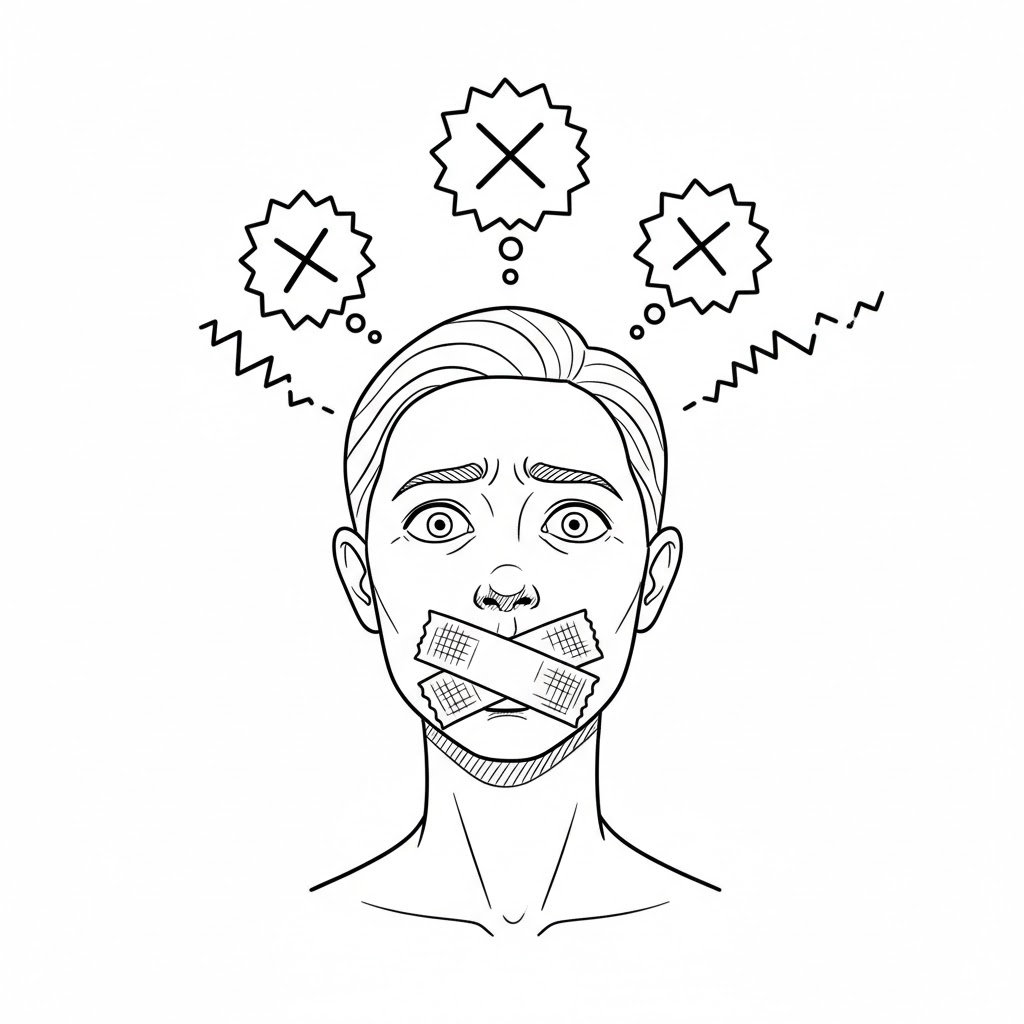 |
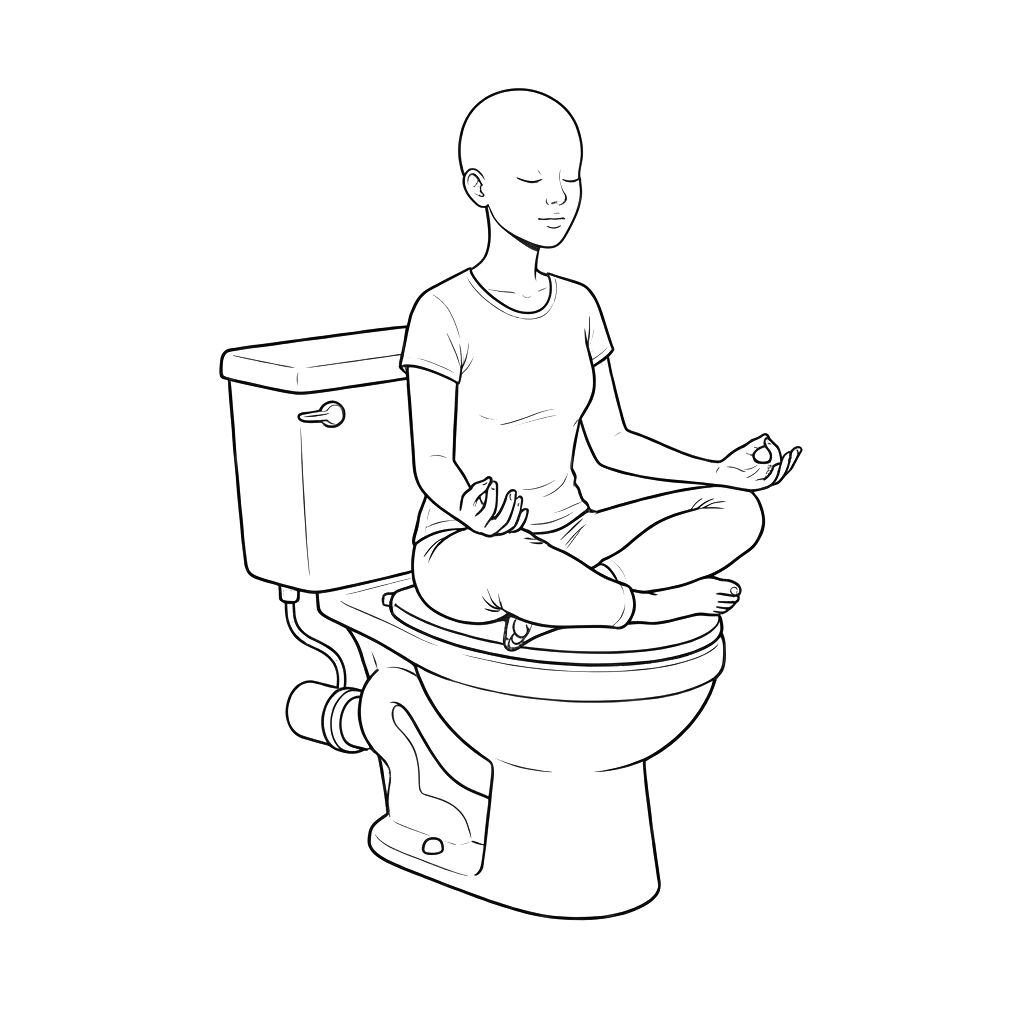
| Good foods lead to good poops, but… | … you must also have the mental space to appreciate your poop… | … and reducing the act to taboo or grossness only removes this space. |
So, what factors affect whether a poop is "good"?
- Physical reasons: Poop is a byproduct of digestion, among other bodily processes. As such, what you eat and what you drink are big factors in poop composition. A few examples:
- Poop that’s under-fibered can be small and hard to efficiently push out, like mashed potato.
- Poop that’s under-hydrated becomes hard like a rock.
- Poop that contains too much fat becomes greasy, mushy, and can even float in the bowl just like oil floats on water.
- And bad smells can sometimes be a symptom of over-fermentation or inefficient microbial digestion.
Notice, I’m not using many medical terms here - things behave inside your body much like they do outside it.
- Mental reasons: This is your "mental hardware", because it refers to the macro-structure and health of your brain. To have a good poop, you need both the capacity to make it/expel it and the ability to notice the results of your work. Improving your mental health - via sleep, eating vitamins, dopamine regulation, and more - ensures your good poops actually feel good to you.
- Emotional reasons: This refers to the thought processes (micro-structure) of your brain. Taboo and embarassment, two common kinds of thoughts people have about poop, often stop people from even starting this journey. The idea that poop is "gross" leads people to flush it away the second it's out (or not engage fully with the exercise), missing the feedback entirely.
But... why so vague?
| Medical Journals | Anecdotes | Online Resources |
|---|---|---|
 |
 |
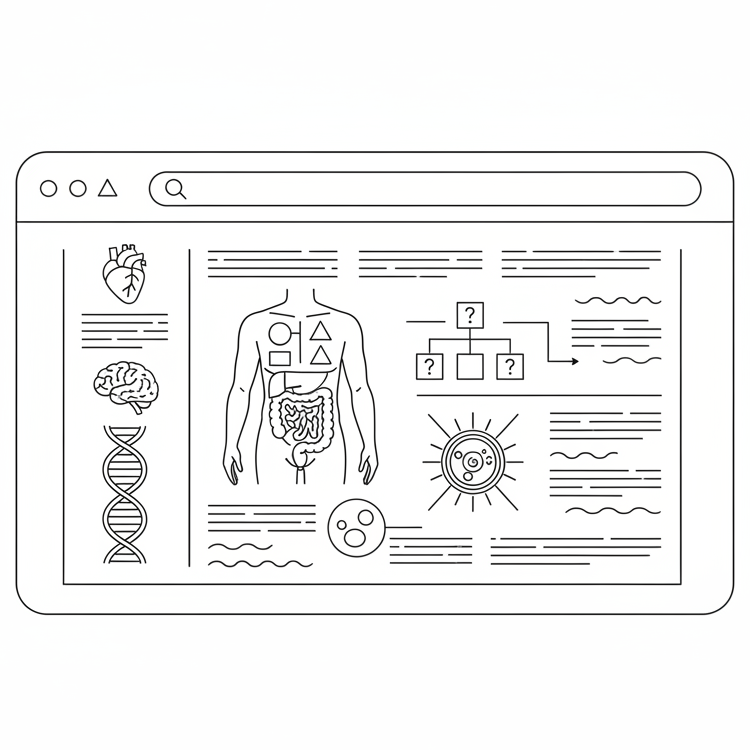 |
| Inaccessible and expensive ($thousands per year). | Lost to time the moment it's spoken. | Over-clinical, over-simplified, or terrifying. |
That said, you may have noticed that my explanations were a little vague. Or patched together. And the gap is that there is no publicly accessible, commonly known in-depth single resource on “why good poops feel good” or even “what makes poops healthy in general”. Yes, we have endless textbooks and papers on Markov Chain Monte Carlo, Quantum Field Theory, or cognitive psychology, but 200,000+ years of pooping hasn't produced modern, accessible knowledge for the everyman.
- Medical journals are locked behind paywalls - if you know their names, which most people don't.
- Anecdotes can help a person at a time, but they're lost if they're never recorded.
- And Online resources like WebMD sometimes offer good advice, but more often make you think you have 50 diseases you can't pronounce.
A call to action
So that's where we come in. If we don’t have these resources yet, what would it take to create them?
If that sounds like something interesting to you, hop on over to this blog post, which contains our Discord link.